Showing posts with label games. Show all posts

Wednesday, July 8, 2009

Fallout 3: Chinese Takeout pt. 1

I got Fallout 3 over Christmas when everyone else bought it, but it sat, unplayed, until May because, based on my experiences with Oblivion, once I started journeying in the Capital Wasteland, I wouldn't be coming out anytime soon. That's exactly what's happened.


Fallout 3 has a different quest structure than Oblivion. Actually, it has the same structure for some quests, but different structures for others. Oblivion had quest chains, where you talked to someone, they gave you something to do, you did it and went back to them, then they said, "Come talk to me again when you want something else to do."

When you had a quest, it showed up in your quest journal. You might have subtasks to do on the way to the main task, and those would show up too. That way, if you put the game down and came back after awhile (or just got sidetracked with some other quest chain), you could check your journal and pick up on a quest at any point. If you finished a quest it would disappear from your "Active Quests" page and go to the "Completed Quests" page, and if you didn't want your active page cluttered up with tons of things, you could not take the next quest from the quest giver until you were ready. This gives players a satisfying To-do list at all times, and a feeling of accomplishment as things were checked off. You could even look back through your completed quests to see all the things you had done and get a further sense your progression in the game.

Fallout 3 has quests and quest chains, it has a journal where your To-do list is kept, and it keeps track of your progress in the main quests. It also has many, many things to see and do that aren't listed in any quest chain. It has random encounters that may lead to other discoveries, it has buildings that tell stories, and many of the things you do change the world, just a little bit. It even has real moral choices, but I'll get to that later.

The largest quest I've done doesn't appear on a quest chain. It isn't contained inside a building (in fact, it takes place over most of the capital wasteland). It doesn't appear on any of the strategy guides or FAQs, and I'm not even sure the designers ever intended to make it a quest.


It starts, fittingly, on Memorial Day, while I was over at my friend Joe's house for a cookout. We got to talking about Fallout 3, which he had played, but abandoned because it was a lot of the same thing over and over. He hadn't progressed very far on the main story, he had just been wandering the wasteland killing people and taking their stuff. We ended up at his computer, so he could show me his character build. Basically he could hit just about anything with his sledgehammer and it would explode. He cursed another friend who told him to take the Bloody Mess perk, because he ended up having to scour the landscape looking for bits of his victims in order to take their stuff. In the low scrub covering most of the wasteland, it was a pain in the ass.

He showed me. He happened to be inside a factory full of zombies. He walked up to one as it shot him with an assault rifle, hit it with his sledge, and boom, it was pulp. Other zombies spotted him and started screaming things... in Chinese.

"Is that Chinese?"

"I guess so."

"So these are Chinese zombies?"

"Yeah, this whole factory is full of them."

"Huh."

I didn't think anything more about it. There are a whole lot of weird things out there in the wasteland, and Joe had found a factory full of Chinese zombies. But that day started my quest, even though I didn't know it at the time.

Sunday, April 26, 2009

A Final Word on Far Cry 2


I finished this last night and I wanted to talk a little bit about the endgame.

When we think about designing a game, we go through three basic steps:
  1. Define what you want the user to experience.
  2. Describe a mechanic that will lead to that experience
  3. Write the rules that will lead to that mechanic
In the previous interview (scroll down) Clint Hocking said:
However, this high level of power in the mid-game is supposed to be the peak… in the end game, after you get your supply of malaria medicine cut-off, you are supposed to get weaker and the game systems should force you to be more brutal – using more and more powerful weapons and confronting enemies who are more and more easily and frequently wounded.
I never ran out of malaria medicine. The malaria was only a nuisance that either made me stop for a second and pop some pills when I was traveling, or made me randomly die if it popped up during combat. So whatever mechanic you had in mind, Mr. Hocking, it didn't work. Sorry.

But there was another mechanic that did work.

There comes a point in the endgame of any shooter where you have access to all the weapons, you've seen all the various types of enemies, you've fought in pretty much all the terrains, and you're good enough at the game that you're somewhat going through the motions to get to the end. This is why there are boss monsters where none of your normal weapons really work and the rules are changed. This is why you have to push buttons for endgames to set up the big lightning machine, or somehow jump into the giant babyhead, or have some sort of race against time. The normal mechanic of the game has become so repetitive (see enemies, avoid their shots, shoot them) that the designers need to change it up to keep you interested.

I like to call it "shooter ennui."

I think it might have been an accident, but Far Cry 2 uses shooter ennui as part of the story. By the time I got to the endgame, random checkpoints were more bumps in the road than actual challenges. I had an exploding projectile gun on my jeep most of the time and could kill any wandering patrols before they could shoot at me. I had a .50 caliber sniper rifle that could one-shot anyone without a head shot. I rarely even got close to running out of ammo. I started to feel bad for the guys repeating to themselves, "He's just one man. One guy. I can do this. I can get him," before I'd kill them.

I was getting sick of the killing. It seemed pointless. Nothing was going to change. There would always be more guys manning the checkpoints. There would always be another warlord stepping up to fill the shoes of the guy I assassinated. Would it ever end?

Which is exactly what the designers wanted me to experience. I became the world-weary killing machine that was all the character definition they had given me. They did it through increasing the power level of my weapons without necessarily increasing anything about the enemies I was fighting. The game actually got easier in the last third, which seems counter-intuitive for a design, but it translated into the correct user experience.

And then they finally gave me an out. So I took it. I'm not sure if there's a "bad" ending. The ending I had was bittersweet. If I didn't bother finding Jackal tapes and giving them to the reporter would he not be my ally? If I had let the reporter die? If I had gone back for my buddies instead of saving the helpless at the end of Act 1? I think my ending was the best I could hope for given the circumstances of the game. Is there a better one? I don't know, but I'm satisfied with the one I got.

Only Africa won.


Sunday, March 15, 2009

Storytelling in Far Cry 2


I've now spent a lot of time with Far Cry 2 (not finished yet), and the story generation is still linear. The first half of the game is very open, but around halfway you are sent to a second map where stories are set up via linear terrain. Here, look at the maps.

Note the path from one map to another, that's a classic gate. Then look at the lower map (which is the second one). Note the very linear valleys in the lower right. I guarantee you that's the climax of the game right there. Note that what you've got on both maps is a hub and spokes structure. Most of the time you get a mission from the middle of the map, and you can see that there are very definite paths outward (to whatever objective), so each mission becomes essentially linear, though you have choices on how you're going to get there, but that's really just how many shootouts you're going to get into on the way.

So while they were touting some sort of emergent story, what they've really got is 5 types of missions:

1. Main story missions which advance the plot and get money
2. Buddy missions to build "history" with your buddy and give you perks at safe houses
3. "Good" missions to get malaria medicine
4. Weapons missions to unlock better weapons
5. Tower missions for lots of money

The player mixes and matches and the particular mix they choose is the "emergent" story. They talked about doing too many Buddy and Tower missions giving you "infamy" so the "Good" missions dry up, but in practice players mix and match the missions just to give themselves some variety (that's what I did, because the Tower missions are always assassinating someone, and the Weapons missions are always blowing up a convoy, which get boring if you do them over and over). In comparing my experience to others, the main story plot points are all the same. The people who give me the missions may change, but the missions themselves remain the same.

Two things from a recent interview with the designer back me up:

From Game Informer Online:

GI: Why did you split the map up into different sections?

Hocking: The game world was divided into a Northern and a Southern region for a couple of reasons. Firstly, it was to allow for a progression in the story and a place for the player to be ‘exiled’ to after the coup by the leading faction at the end of Act 1. It also allowed us to have a broader architectural and environmental art palette and to show a progression in the look and feel and mood of the game over time. The Northern region is more ‘spotted’ in the way the jungle, woodland and grassland environments overlap, and is dominated by shanty and industrial architectural features. The Southern region obviously has the lake and larger sections of desert (especially in the north of the Southern region) – it also features more indigenous and colonial architectural elements. The Southern region also includes the so-called ‘Heart of Darkness’ – it’s own natural environmental art palette. Needless to say, with all the streaming going on, we were not able to have all of these environments and architectural styles in close proximity to one another, and so in addition to using these styles to show a progression, it allowed us to control the technical problems of streaming much more effectively.

GI: It seems like the game is at its hardest early on, before you get decent weapons or allies. Was that intentional?

Hocking: We wanted the game to seem difficult at the start when you are sick with malaria and vulnerable in combat (and you have crappy weapons and few allies) – and then for you to get rapidly more powerful through the mid-game as you get new weapons, allies, equipment, and your symptoms fade and your reputation increases. However, this high level of power in the mid-game is supposed to be the peak… in the end game, after you get your supply of malaria medicine cut-off, you are supposed to get weaker and the game systems should force you to be more brutal – using more and more powerful weapons and confronting enemies who are more and more easily and frequently wounded. In the beginning, you should be fighting to survive because you don’t have a choice, in the middle, you should be enjoying the luxury of good health, a moderate reputation and fairly good weapons… you should be able to use an ‘appropriate’ level of aggression to solve the game challenges. In the end, the game systems should be almost forcing you to be as aggressive and brutal as possible. In short, the game should first teach you to be brutal, then force you to be brutal. The difficulty should be shifting from a technical difficulty of reflex skill and resource management to a psychological challenge that asks you how far you are willing to go to achieve your ends. I’m not sure the extent to which we succeeded with that, but we tried.
So despite all the talk at last year's GDC, Far Cry 2 is still a mission-based sandbox game that is closer to GTA than, say, The Last Express.

I spent the morning in Africa


This morning I had the perfect sniper moment.

I crept up to the compound where I was told my target would be. It was just off a road, and I slowly crested a hill overlooking a number of buildings and a dusty yard between them. I wasn't too worried they'd spot me in the heavy jungle. Besides, I had my brand new camo suit on. It was also my first outing with the dart gun, which traded a range and a large clip for silence.

Now I've done five or six missions like this before. Here's what happens-- you creep up out of site until you see the guard walking the perimeter. If there's a tower, you better hope you see it before the guy with the sniper rifle or rocket launcher sees you. If there's a tower, you take that out first, then you try to wound one of the guards. He'll cry for help, attracting other guards. Whenever someone shows up to help him, you take him down with a head shot.

Of course, other guys will be trying to flank you, so you may have to reposition a couple of times, or if it really goes to shit you take out the grenade launcher and lob one in. Or start a fire with a molotov and wait for it to be over. Generally, it starts out as a sniper mission but it ends in chaos.

But this morning was different. This morning, I crept over the hill and looked through my scope. I saw two guards walking the yard, and I tracked around, looking to see what I could see.

A man in a suit walked into my sight. He stopped. I pulled the trigger. Perfect head shot. Just a small pop from my gun.

Objective accomplished.

I faded into the jungle for the long drive back to Mike's bar.

I love Far Cry 2.

Friday, February 6, 2009

WPI GameJam

The WPI GameJam came a week after IGDA's Global GameJam. That meant we had all WPI students participating, and no outside schools. Ah well.

Over the weekend, groups started and worked on games for the Mass Game Challenge. 38 Studios sent designers, artists, and programmers over to talk to the teams, review their ideas, see what advice they could give, and provide pizza. We webcast the whole thing almost live (about a minute delay for technical reasons, not about censoring anything) which led to a strange call from Chuck Rich where he was talking to me on the phone and watching my answer about a minute in the past. He was giddy with excitement, which is always fun to be a part of.

During a lull in the excitement (aka, when everyone was actually working), I sat playing my DS and overheard Rich Gallup talking to one of the kids and suddenly it clicked (because I was just listening to him instead of talking to him directly)-- he's the Rich Gallup from Gamespot who's podcast I used to listen to! So I told him so, and we had a weird moment of not quite fan meeting, because I hadn't said I liked the podcast, only that I listened to it. And, of course, the one thing I remembered about him was that he recorded the whole thing standing up while everyone else sat down and made fun of him for standing up. Again, it wasn't exactly, "Hey, I liked your podcast," but it certainly proved that I actually listened to it. I mentioned that he left before the whole Gerstmann-gate thing blew up, and he said he was still in touch with all those guys, and then we kind of paused...

And then one of the other 38 Studio guys called him away and we never mentioned it again.

Awkward.

For the record, when Gallup left the Hotspot, it was pretty much the beginning of the end. I eventually stopped listening to it because the guys were so demoralized after Gerstmann-gate that it was a little sad to listen to, as they each got jobs elsewhere and said their goodbyes.

And Rich and all the guys were great to show up, and I know the kids thought it was great to have them there whether they were helping or distracting them.

Sunday, August 24, 2008

Boston Gameloop '08

Yesterday was the first ever Boston Gameloop UnConference which took 45 local developers, threw them into the MIT-Singapore Gambit Lab and expected them to talk about interesting things.

We did.

This is the brainchild of Darius Kazemi and Scott MacMillan who have been turning the Boston Post Mortem into a real developer community over the last year or so (and I'm probably showing that I have my head up my ass by not mentioning the other people on the BPM committee, sorry, other people). Darius asked us to write, post, or even just email our scanned notes to him and he would transcribe them.

When he asked that I made this:


That's Ralph, a little guy I've been drawing since I was eight. Yesterday, for some reason, he had a mullet. I was just trying to bring a little visualization to the proceedings. Oh, and yes, we learned the earth-shattering fact that a free open bar gets people to come to your event. There was no free open bar (isn't that redundant?) at Gameloop.

We arrived at the ungodly hour of 9am on a Saturday, and we milled about, as geeks will do. We were told to put up a topic that we wanted to talk about, or if we weren't sure there would be enough interest in our topic, but it up as a trial topic on a sheet on the board. We would put a hash mark on anything we were interested in. If a trial topic got enough has marks (no definition of "enough") then we could move it over to a card and schedule it.

After a bit, the board started looking like a schedule, and eventually it looked like this:


So here was my day, and I apologize if I don't get the titles quite right:

  • Interactive Actors that Express Emotion - was an actual talk prepared by Gerry Seidman from Actor Machine. He's working with Ken Perlin on a bunch of Maya plugins that will allow a model to be given a character, or a basic description which will allow the model to animate in line with the character. Basically you don't have to keyframe everything, behaviors are part of the model itself. Gerry showed a lot of demos from Ken Perlin's actors page. This would seem to enable very quick, procedurally generate crowds, as well as low-overhead projections for live performances. I'm going to ceep in contact with Gerry on this, as some of my projection work could benefit from this, as long as it would all work with importing models into Unreal.
  • Boston Games Industry, What's Next? - Did you know our Post Mortem is the best attended and most frequent IGDA meeting in the world? Did you know Massachusetts has recently instituted tax benefits for the film industry, and at the last moment included the game industry in those benefits? Did you know the general perception in the games industry is that there are no developers in or around Boston? Yeah, that last one sucks. So what's next for the Boston games industry seemed to be two things:
  1. We need better PR to tell people that we exist. It occured to me this morning while reading Edge, that every month they spotlight a different city or region, get a roundtable of all the developers there, then do individual articles about the major developers in that area, yet I hadn't read one about Boston. Hmm... So basically we need a Local Game Industry Evangelist, which was when everyone looked at Darius.
  2. The other thing was to leverage our strengths, which seemed to be that we're a hotbed of academia with a number of very strong game development programs. The talk then turned to internships and entry-level hiring vs. experienced hiring. I outed myself as an academic (there were no academics allowed at this, though the MIT-Gambit lab seems perilously close to academia, and they were well represented) and talked about when to look for interns. It seems to me that game companies don't think summer starts until June, when all the WPI kids leave at the beginning of May. I asked them to start looking in March/April in order to actually get local kids into local companies.
  • LUNCH! Pizza and soda. Not doing my waistline any favors.
  • Board Games Workshop - in which we took familiar board games and discarded the rules and made new ones. We grabbed Scrabble and, after some farting around, Devin Griffiths (who said he wasn't a designer. "Feh," I say to you, "Feh.") came up with Scrabble Hold 'Em which put three common tiles in the middle of play and gives each player four tiles to make words with. The first player to finish gets 5 extra points, the player with the longest word gets 2 extra points. We were trying to make a very short game, and we were trying to eliminate the downtime in Scrabble where you're sitting there as the other person stares at their tiles. Even then, we wanted to solve another problem of Scrabble, that players don't interact, so we came up with Scrabble Stealing in which each player gets 7 tiles and starts to make words, but at any time another player can offer a tile and "steal" a random tile from you. Tiles already in complete words were "safe." When the first person uses up all their their tiles, the game is over, and you only get scored on tiles in words. This again kept it short, gave a "screw you" element to the game, and rewarded people for coming up with the first word they saw instead of staring at their tiles forever. This hour probably went by the fastest of the day.
  • Low tech games (ARGs != Marketing) is the session I proposed. I wanted to talk about indie ARGs and bring game design sensibility into what seems to be a "webbie" industry. At ARG Fest O Con, it seemed odd to me that not one local game developer was present, in fact, even though it was announced at Post Mortem, most every game developer at GameLoop didn't know about it. I deal with the problems of getting players for our ARGs, because they're quick, they're free, and most people "like the idea but just don't have the time." I described the inverted pyramid -- hardcore at the tip doing most of the content, casuals in the middle watching the hardcore, cheering them on, but not really participating, and the lurkers who tune in, don't have time, and read about how it went when it's all over. This seems remarkably like a problem that MMO developers deal with. Do you make more content for the hardcore, or do you serve the casuals? One idea that came up for ARGs, was a very quick ARG (my class does 5 day ARGs) that you sell tickets to. That would monetize the ARG, localize the ARG, and everyone participating would know that the commitment was short. This really takes a page from LARPing and Murder Mystery Dinner Theatre. I'm going to think about this more. My one regret was that there were two other bitchin' sessions during mine, and I would've liked to go to both of them.
  • Turning Licensed Properties into Games - This was a talk that Matt Weise and Geoff Long are prepping for Austin GDC, basically pointing out that licensed games only recreate a small subset of the activities portrayed in their source material, and that the barrier to using more is no longer technical, it's a lack of imagination. Unfortunately, when they asked me to name the last movie I had seen, I replied (truthfully!), "Shooter." It was not the best illustration of their point, but we moved on to Rudeboy, Almost Famous, and Death Note. They used conversions of James Bond properties to shooters as a good example, and then went one step further to point out a weird verb in the Bond lexicon -- "Use super senses." This is when Bond shoots exactly the right thing to cause a chain reaction that saves his bacon. In one of the Bond games, they translated this as "Bond sight" where bond can see targets that will cause unexpected things to happen and create "Bond moments." I'd like to see them extend this and not just handwave that verbs like seduce, investigate, and grow up are possible, but show us how they've already been done in other games. That would pretty much prove their thesis.
  • Finally, OMG Jonathan Blow is teh Awesome! or Design and Narrative - This was Scott leading a roundtable that was interesting, but also somewhat maddening, because some of us were speaking different languages. There seemed a whole camp (led by Tynan and Scott) who saw emergent stories as the future, but admitted that the stories had to be interpreted (read, rewritten) by humans in order to become interesting. So AAR's of Starcraft become interesting because a human is interpreting what would be unintelligible if you just watched the game. Additionally, there are a whole host of games, all strategy titles, which have interesting events happen, that, when strung together become a narrative that was experienced by the player. Personally, I don't see AARs of strategy games as threatening the novel anytime soon. When the writer-types in the room (myself, and Devlin leading that charge) talk about game narrative, we still want a feeling of authorship on our part. Bioshock is pretty much the same story for everyone who plays it, and it has definite high points and lulls, which were designed by the writer and designers. Mostly I wanted to talk about Braid, but everyone in the room hadn't finished it, and that put a bit of a damper on that discussion. Again, Braid is being held up as what games are capable of as narrative, but everyone who plays it has more or less the same experience. Braid is authored, whereas King of Dragon Pass, and Dwarf Fortress are designed in such a way that interesting things might happen. And that's a big might. Most of the time, nothing interesting happens, but when something special does happen, that's the one instance the player remembers and recounts.

Afterwards, there was a brief announcements session and a promise that we would all do it again, but not for a year or so, and starting at 10am instead of 9am, maybe with healthier foods, and with t-shirts that weren't orange.


Then there was beer at CBC, with even more discussion. All in all it was a very tiring, very rewarding day.

Friday, August 8, 2008

The Legend of Neil

Just had to post a link to this, because it's great. From the makers of The Guild comes The Legend of Neil, wherein a guy wakes up as Link in a Legend of Zelda game.

I found it over at Dubious Quality, but it was in his Friday Links extravaganza and I thought it deserved better.

Sunday, July 27, 2008

Penn Says

The other day I went over to Crackle.com to watch Jack Thompson on the Jason Hall Show, thanks to Tom Chick's blog when I found Penn Says, which is just Penn Jillette talking on camera about whatever comes into his mind. He started doing it in January, and seems to be pretty regular with it. I've been listening to it for hours now, and I'm about halfway through them.

As a fan of Penn &Teller and a listener to Penn's radio show during its all-too-short run, this is great. Hell, I even entertained the guys at Ben Aldrich's bachelor party with information gleaned from Penn over why monkeys (actually chimps) don't get along with dwarves.

Saturday, July 26, 2008

ARGFest-O-Con '08

Last weekend ARGFest-O-Con '08 took place at the Radisson Hotel in Boston. I heard about it through the IGDA ARG Sig mailing list, and, after checking out their site, figured it was just a bunch of ARG enthusiasts from Boston.

Except there were people there from all over the country, some of the biggest names in both commercial and independent ARGs, and the whole thing was sponsored by 42 Entertainment. This was the seventh annual ARGFest-O-Con, which began when Sean Stacey, the guy who runs unfiction.com decided to go visit Steve Peters in Vegas and posted on unfiction that people should join them for a beer. More people showed up than they bargained on.

Seven years later I blunder in, and was welcomed with open arms. These people are some of the coolest, nicest, most talkative people I've ever met. I didn't preregister, I don't have an account at unfiction, and I basically had no clue. Within 30 minutes of arriving I was talking to people I had never seen before about all sorts of things, including which games I've played and which I haven't. By the end of the cocktail party on Friday night, I had made a number of contacts, and, I think, a number of friends.

Also during the cocktail party an unkempt, drunk man stumbled in, warned us all about the invisible people, tried to punch an invisible person but only managed to spill his drink, then stumbled out again. The hotel staff looked nervous. The crowd applauded. One woman yelled, "He dropped some papers!" Everyone crowded around a picture of the New England School of Law which, coincidentally, is right across the street from the Radisson. A smaller group rushed off to investigate, but I returned to my newly bought beer.

Perhaps forty-five minutes later the same man, now showered and sheveled (is that a word?) sat down next to me and struck up a conversation. I bought him a drink, observed that I had recently seen him as a drunk paranoid schizophrenic, and he told me that some ARG puppetmasters had asked him to play the part. I found out that it was part of a larger, ongoing ARG (phew! at least I wouldn't have to go running off after every clue here at the con), and that the information gathered as part of his clues wouldn't pay off for another two or three weeks online.

When the investigators returned they had the same information I did, but they ran around some hot Boston streets to get it, whereas I had just bought a guy a drink. I guess there's more than one way to play an ARG.

Saturday was a full day of talks and panels, some great, some okay. In the middle of Steve Peters' talk (where he pointed out that all ARG heroines are studious looking, attractive brunettes), this guy walked in:


And only at an ARG conference would the audience begin taking pictures of his tatoos, looking for a possible clue. After all, we were going to have to solve a series of puzzles in order to find out where dinner was that night. I don't know if anything printed on him ever paid off, but I found dinner without referencing him. I think Steve was just trying to go against stereotype and used a visual aid to prove his point, but that's the problem of ARG's. What's a clue? What's a troll? Which are the red herrings and which will pay off?

There is also a real dichotomy between the commercial ARGs which are all for marketing something else (like Why So Serious, Vanishing Point, and Year Zero) and the independent ARGs (like Perplex City, World Without Oil, or Deus City). As evidenced by this blog, most people have only seen the big marketing pushes and don't even know about the independents making ARGs for ARGs sake.

And that's because no one has found a way to make people pay for the ARG experience besides using it as a marketing tool. Majestic failed. I suppose Perplex City at least broke even, but I hear Adrian Hon isn't going anywhere near Season 2 because Season 1 seriously exhausted him. Of course, Adrian is over at We Tell Stories, which seems a much less taxing take on mixed media (and it's sponsored by Penguin Books so it probably pays better).

Saturday evening kicked off with FestQuest, a chance to run around the streets of Boston (93 degrees at 6pm) solving puzzles. Our first puzzle:

which the group solved in the lobby while I was in the bathroom. We had to find the sculpture of the Tortoise and the Hare, which is apparently in Copley Sq. (my wife told me afterwards). Now I've been around Boston, I can find an address, but ask me to find a particular sculpture? Nope.

In the end it didn't matter. We spent an hour and a half wandering around the common looking for the statue, then decided to try to solve the other puzzles. We skipped to location #5, which was 45 School St. (Old City Hall), and from the clues there, put it together that we were supposed to meet the group at Fanueil Hall.

We were the last to arrive. (sigh)

I ended up having dinner with a PR rep for the LA school district and two German viral marketers in the North End. I went crazy at the silent auction, and ended up getting the 42 Productions package, which included two NiN CD's, the I Love Bees ending DVD, a Vanishing Point t-shirt, and a bunch of stickers and buttons. I went in for the I Love Bees DVD, but really enjoyed the Year Zero NiN CD (I had already downloaded the Ghosts CD).

Great stuff, all in all. Next year, if the timing works out, I'll fly out to Portland, Oregon for ARGFest-O-Con '09.

Friday, July 25, 2008

Frontiers '08

Today was the last day of Frontiers, a summer program where high school juniors and seniors come for two weeks to see (kind of) what college is like. I've been doing this for 14 years now in some capacity. The last three years I've been teaching the Art component of the IMGD "major."


That means we have a week and a half of two hours per day classes. I speak for the first hour and then turn them loose on the computers for the second. They design and build Unreal Tournament 2004 levels. I have a TA (hi Eric!) who actually remembers much more about UT2004 editing than I do.

The gang did much better this year than last year. Basically everyone had a playable level. They could all probably use a bit more polish, all the level properties set correctly, a screenshot from the level displayed in the menu, more stuff on the walls, and some set dressing, BUT they were all fun to play. At the end of the day, that's all you can ask.

And really most of them did it in about three days. You see, first they have to work through a video tutorial making their first level. That's most of the first week. The UnrealEd software is really user friendly and easy to pick up. So what did I do differently this year? I stressed a process for level design. It's pretty simple.

Dean's Guide for UT2004 Level Design (applicable to other games too):
  1. Have a theme. What is this place? What is it used for when guys with big guns aren't running around gunning each other down there?
  2. Draw it out on paper first. It's much easier to erase and redraw a line than it is to replace a hallway or resize a room.
  3. Lay out all your gross architecture first with a default texture. It doesn't have to look good at this point, but it should be almost playable.
  4. Position all your gameplay elements. Those are spawn points, weapons, health, armor, adrenaline, liquids, and movers (elevators, conveyor belts, pits).
  5. Light it. Quick and dirty. Don't fuss over shadows.
  6. Playtest, playtest, playtest.
  7. Repeat #4.
  8. Apply textures to everything.
  9. Place static meshes to make the level look like a real place.
  10. Relight, adding colors and effects.
  11. Polish: add music, original sounds, level info, etc.
And that's pretty much it. Most of them ran out of time around step 8 or 9, and probably still need more playtesting.

Now I wanted to post a screenshot from each level with a brief description, and maybe a link to all of them. Eric made a pile of CD's so the kids could all take home the work they did, and included one for me. I got it home to load it up and start taking screenshots and found my CD was blank. I'm hoping that it's an anomaly and that the rest of them actually have something on their CDs.

I'll post them as soon as I get them.

Sunday, July 1, 2007

The Evolution of the Shooter

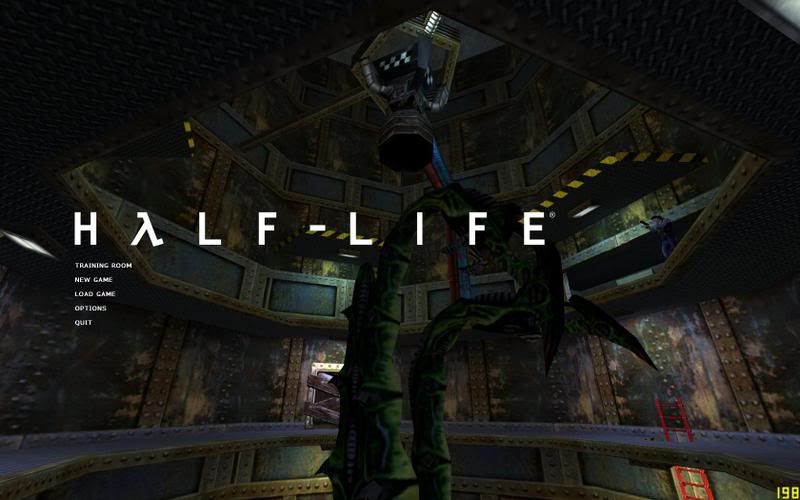
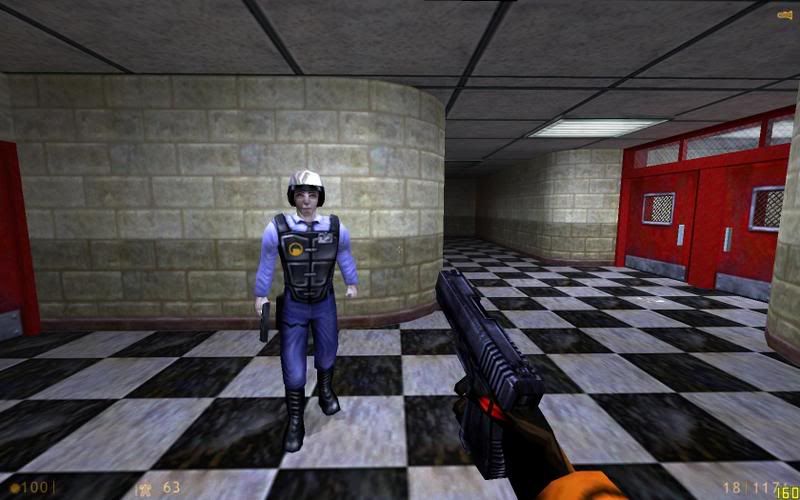
After years of sheepishly admitting that I've never played it, I finally played through Half-Life. Yeah, the original one. I started Halo at about the same time, so it was a nice contrast to play the 1998 shooter during the day, then the 2001 shooter at night. My TV has a wicked glare, so there is no console gaming (especially something as dark as Halo) during the day. Since it's summer, that means that I've finished Half-Life while I'm barely halfway through Halo.

We talked a lot about the wide road theory of game design when putting together Immortal Throne. That is: we're building a road, or a strictly linear game. Essentially the player travels the road and sees the things you've set up, and fights the battles you've placed in his way. The wider you make the road, the more it feels like the player actually chooses his own experience, when actually, all he's choosing is whether to travel down the left side of the road or the right side. Half-Life isn't a very wide road. In fact, mostly the road is a corridor wide. It's relentlessly linear, and everyone who's played it has had basically the same experience. So why is it hailed as a huge step forward in game design?

Because it never leaves that road, the writer now has a more or less linear plot that can unfold.

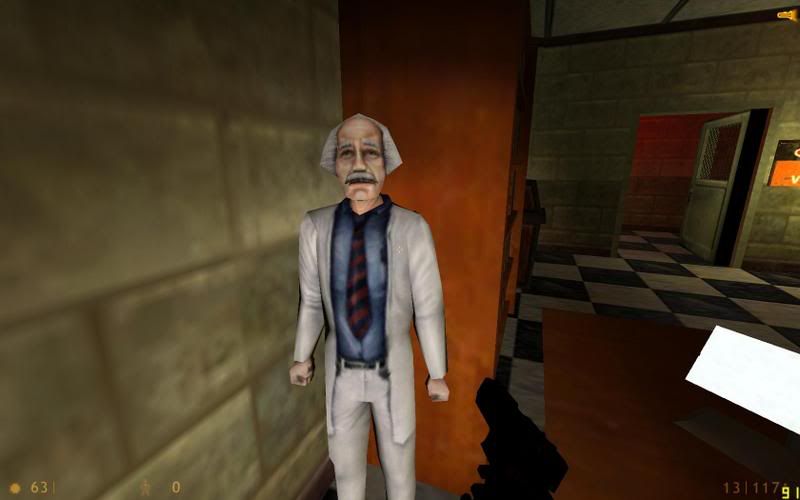
Everything happens from your POV. Scientists get sucked into vents, and if you see it, then you saw it. If you've turned away, then you might hear it. You might see it out of the corner of your eye (or screen, in this case), or you might just catch a glimpse of it as you're turning to look at something else. The story is told by the environment, with the occasional lapse into "you have to get to the lambda complex!" not from some disembodied voice in your ear, but from a terrified scientist who isn't willing to leave the safety of the corner he's found. We know a little bit about what happened, but we piece together the events of that day from the things we see, not what's told to us.

That's a great lesson for all game writers. Trust the audience. If you spell everything out in minute detail, your audience has probably already figured it out. If they don't get every little nuance of your world, so be it. It's their world now anyway. I'm not sure exactly what happened at Black Mesa, but I don't think Gordon Freeman or anyone involved it. I'm not exactly sure why I launched some satellite on the way to the Lambda Complex, but I figure someone will tell me eventually, or maybe not. Maybe it was the first step in bringing Breen to power, or maybe Breen was in power all through Half-Life and it was just another day at the office away from City 17, or 15, or 2.

It made me think about the story as well as what kind of ammo I was using and how to sidestep and hide from army guys.

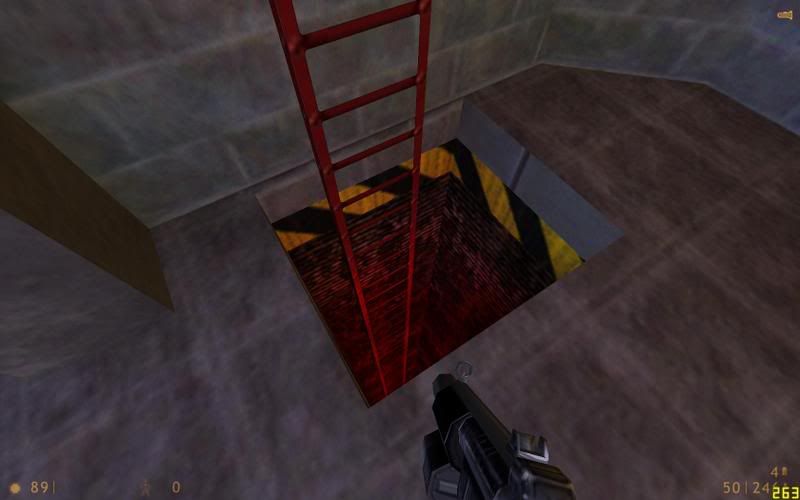
I've heard people complain about the jumping puzzles in the last third of the game, but sonny, there were jumping puzzles throughout. I lost much more health to ladder mishaps in Black Mesa than to alien beings from another dimension. It got to the point that before attempting to get on a ladder I would automatically save the game. The last third had weird alien platforms instead of broken catwalks and mountain ledges, but it was the same gameplay.


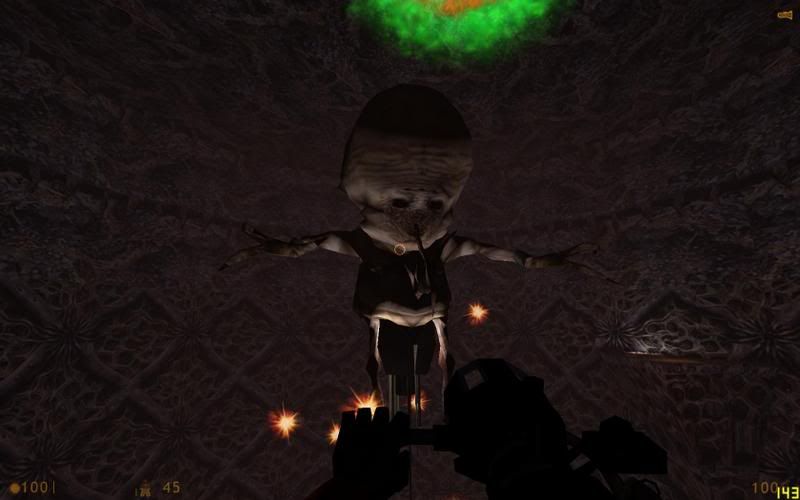
My one complaint is the giant baby-head at the end. (Is it okay to spoil a nine year old game? I know it was spoiled for me before I played, so I guess I'm returning the favor.) Fighting a giant alien baby tells me more about the designers' fears of fatherhood than about the alien race that's trying to invade Earth (or is Earth trying to invade them? That G-man guy sure does talk funny.) The actual killing of the baby-head is anticlimactic in the extreme, because it's more a factor of whether or not you have enough ammo, than any kind of gunplay. You jump into his head when it's open, and you shoot the floor (his brain) until you're out of ammo. It takes awhile, and I'm proud to say I killed the final boss of Half-Life with the pistol (because I'd already unloaded everything else into it). Aargh!


On to Half-Life 2!!!

Wednesday, June 27, 2007

Missing

Okay, so it's been awhile. I've been busily powering through games, but forgetting to take screenshots. I finally got around to this semi-ARG, Missing, and powered through that. I'm trying to put together a project on making a permanent ARG, i.e. one that you can start at anytime and it will work. Most ARGs nowadays have a set runtime (the Halo 3 ARG just started up over at Society of the Ancients and the main Halo 3 website.)

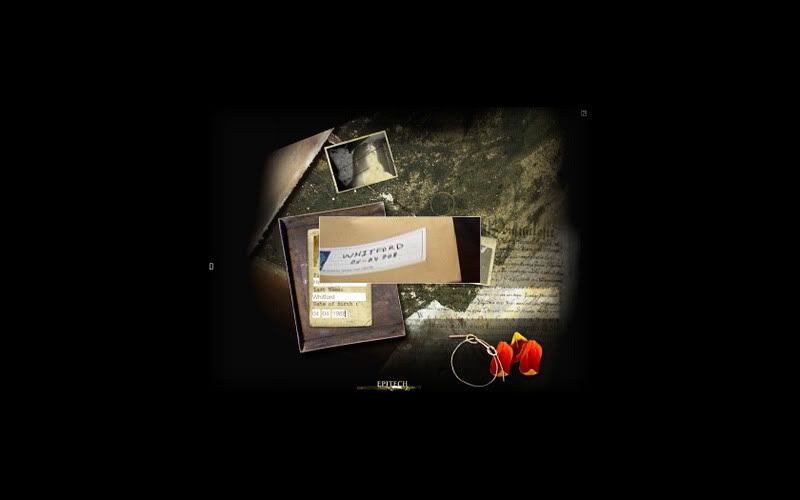
But I'm writing about Missing. It's got a great premise: an investigative reporter and his girlfriend (who turns out to be more than a girlfriend) have gone missing. The web-based documentary film company he works for received a CD, which they at first dismissed as a prank, but have found new proof that it was sent by whoever has kidnapped the pair. It's full of puzzles and it's all encyphered, and instead of turning it over to the proper authorities, they're making it available to the public at large in the hopes that someone will be able to figure it all out. It's kind of like SETI-at-home of crime solving.

It's all very creepy, and it's an old game-- four years old, in fact. It relies heavily on websites and even email in order to tell its story, so it's a good test of whether a persistent ARG can work.

It doesn't.

There are really three reasons for this, first, a sequel called Evidence: The Last Ritual has already come out (and I have it, and it's in my "to be played" pile). So, for instance, a very early puzzle tells me the answer I need to continue is at http://www.xeniph.com/ which forwards you to http://www.xineph.com/31504052414/ which is a nifty little puzzle. If you solve it (which I did), you will not get an answer that will allow you to progress on the CD. In fact, that puzzle occurs nowhere in Missing at all, so I can only theorize that it's for Evidence. Yet some provision for players of Missing should have been made. I had to consult the one and only walkthrough on the web, which told me to go to http://www.xineph.com/aze229d which actually contains the first puzzle you must solve.

The second is the nature of search on the web. The game was designed to give you fairly esoteric terms to search and have the correct website pop up in the top five results. Apparently enough people have searched the esoteric terms (including some fairly obscure proper names) that websites who game either MSN or Google to increase their hitcount have latched onto them. So the first page will be full of garbage links and maybe somewhere on page two or three you'll find the page you need. In some cases the pages are totally gone from the search results, even though the websites still exist. This makes the game quite an exercise in internet sleuthing, and I quite enjoyed finding answers to puzzles in places where I wasn't supposed to go (again according to the walthrough).

The third is that you get email from a number of fictional characters. As part of the fiction, I was paired up with another purchaser of the CD. She was a grad student working on her thesis on the Salem witch trials. I tried to get chatty with her, since I've been to Salem many times, but my email to her just bounced. So much for realism. Later I was introduced to a hacker friend of hers, who threw together some little applets that helped with some of the puzzles. My hacker buddy was so 133t that my ISP's spam filter automatically blocked anything from his address. Not to mention that my own spam filter routinely thought all the emails from the various characters were spam, I had a couple of weeks of looking through my spam bucket for hints and clues.

So the game cannot be played without a walkthrough. The shelf-life of Missing is greater than your average ARG, but it's still finite.

The walkthrough is pretty great, with hints instead of outright solutions, then links to outright solutions. It's really one of the best of its type I've seen on the web, so I was amazed when I got to the end and found this:

In closing, the greatest pleasure I received from this game was ending it. It was frustrating, for the most part, exceedingly monotonous, and the constant interruptions of having to check for clues online makes one feel annoyed throughout the entire game. The ending of the game leaves room for a sequel to In Memoriam; hopefully, however, that will never happen. The ending of this game, after all of the hard work the player goes through to see what happens at the end is inexcusable I feel. After all of the build-up and torment (playing this game), it is as if the developers hand you a a piece of garbage and say: "Here, this is for your efforts." The on-scene locations, via video clips, were nice to watch although each were very brief. The graphics were nice, and the story keeps the player interested enough to want to see what happens at the end. Aside from the aforementioned good points of the game, everything else is awful. I'd recommend reading through my walkthrough (e-mails, messages from the Phoenix, spoilers, etc) for an almost complete understanding of the game. Without playing the game, and merely reading this walkthrough, you will just miss out on the frustration and annoyances of the gameplay, and the several mini-videos throughout. Ultimately, you aren't missing much in my opinion.
Wow. Who goes through crafting such a complete and helpful walkthrough for a game they hate? It's just one of the many mysteries of Missing.

He is right, the ending of Missing is a slap in the face. The last two puzzles aren't puzzles at all, they're twitch games. You have to first complete a Pac-man clone, then battle your way through a top down shooter. It was as though the author (and it is a single author) thought, "Gee, what's the hardest thing I can make an adventure gamer do? I know! I'll have them complete classic arcade games!"

SPOILERS AHEAD

Once you jump through those hoops, you have to play the killer himself in a strategy game that he's made. If you lose, a bomb will go off and kill the journalist and his girlfriend. Nice stakes, and it was a decent game, but after a couple of turns, your hacker friend breaks in and tells you that he's about to locate our heroes based on the signal from this game (or some such gobbledygook), and that you should keep the killer on the line as long as possible. Well, it's a turn based strategy game, so I took a really long time trying to decide my next move. Did the killer complain? Nope, he waited patiently. Of course, I could have left the darn thing sitting there all night if I wanted, because it was a set number of moves before the hacker broke in again and told me that he'd found them and that the police were on their way! Woot! End of game.

Really.

But see, I was kicking the killer's ass. I was going to win, and I never got the chance to best him.

Then a half hour later my friend the Italian detective sends an email (apparently texting from his phone) that he's at the place and it's dark and creepy. Then a couple of hours later I get an email that says they're safe, the a sometime after that I get an email with a link to a video of the girlfriend thanking me for saving her. The video is shitty, and where's the guy?

On the one hand, the way the game is set up dictates that this is how it must end, because suddenly we're not dealing with the carefully crafted puzzles of the killer, we're trying to get people out of a warehouse, and everybody doesn't have video cameras strapped to their night-vision goggles. When they get the victims back to the police station, they're not worried about the schmoe at the computer who helped find them, they just want a cup of coffee and a blanket. So there is a bit of verisimilitude in the anticlimactic ending. On the other hand, in a game that lived or died on it's presentation and style, this was just not cool in any way. I think they ran out of money.

END SPOILERS

And you'd think that after all this bitching it's clear that this is a bad game, but it's not. It's a great premise, it exudes style, the puzzles are great, I learned stuff about European landmarks, the sound design was amazing, the films told a great story, and the lead actress was incredibly hot.

I would do it all over again. And I will, in Evidence.

The best part? Two weeks after I finished the game, long after I stopped thinking about it, I got an email from the killer.

He's still out there.

It was all part of his plan.

And he knows who I am.

Friday, May 11, 2007

Stuck

First off, I have now determined that I cannot keep this updated during the busiest time of the year. It's been awhile since I've updated, mostly because of ARG-mania, then grading mania (more like depression).

But I've had the week off, and now that I've kicked the Oblivion monkey off my back, I dug into the backlog and booted up this gem:


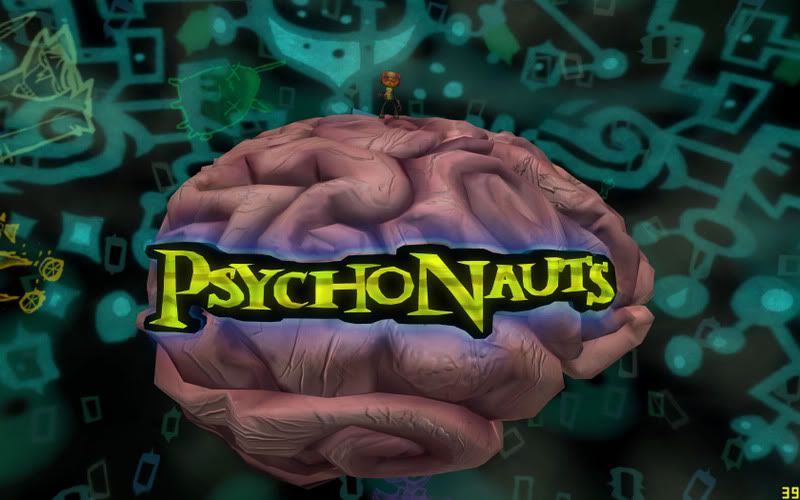
I've given this away as a prize in class, and I've heard nothing but great things about it, so I suppose it was time. The conventional wisdom says that Psychonauts didn't sell because it looked too weird and no one knew what the hell it was. So let's clear that up:

It's a platformer.

If you like jumping puzzles, this is the game for you. Sure it's got quirky art direction and a story, but when you're done watching both the prerendered and in-engine cutscenes (what's up with that? Could the engine not handle some of the things they wanted it to do?) I've now been playing it for about two weeks, and I'm almost done (I think). A few things to talk about here.

Stop with the invulnerable bosses. Every boss in the game has some sort of trick, and your standard attacks generally don't work. Or maybe they work, but only when the red doohickey is showing on the boss's chest. The most egregious example was shortly after I learned telekinesis (picking stuff up and throwing it) I had to fight a giant fish. The fish kept opening its mouth, sucking everything in (including me) and then spitting it all out again to hit me with flying debris. So I figure I should probably use my newly-learned TK to throw stuff at him. No dice. Okay, maybe I have to get it right into his mouth (the soft upper-palate or something). Nope.

Off to the FAQ. [SPOILER] I'm supposed to break the boxes that are flying around with my old punching abilitie. The boxes are, coincidentally, full of tacks, and when he sucks the tacks in, they damage him. This leads me to my next gripe--

If I need a FAQ to complete your game, then maybe we're both doing something wrong. I feel like consulting the FAQ is cheating (a bit), but life is too short, guys. I don't want to have to die 35 times in order to figure out that I have to punch the box on the ground instead of the fish that's threatening me. I'm a relatively smart guy, and I can figure things out with a hint or two, but there were just too many times in this game where I was at a loss as to what I was supposed to do next.

Stop with the "This is The End- OH! No it's not! There's one more boss!" I figured out who the bad guy was, I defeated the mad scientist, I blew up the evil lair. Hell, the game even autosaved and told me this was The Point of No Return. So I should be at the last boss fight, right? No. There's a boss fight, alright, then there's an escort mission, then another boss fight, then jumping puzzles!!!!!!!!!!!!!, and then I suppose there's going to be another boss fight, or maybe something else. I don't know, I'm stuck at the jumping puzzles. I thought I was going to finish this darn thing on Monday, and here it is Friday and I'm still not done. I think I'm about done, but each challenge is just so darn difficult that it takes me ages to get by it.

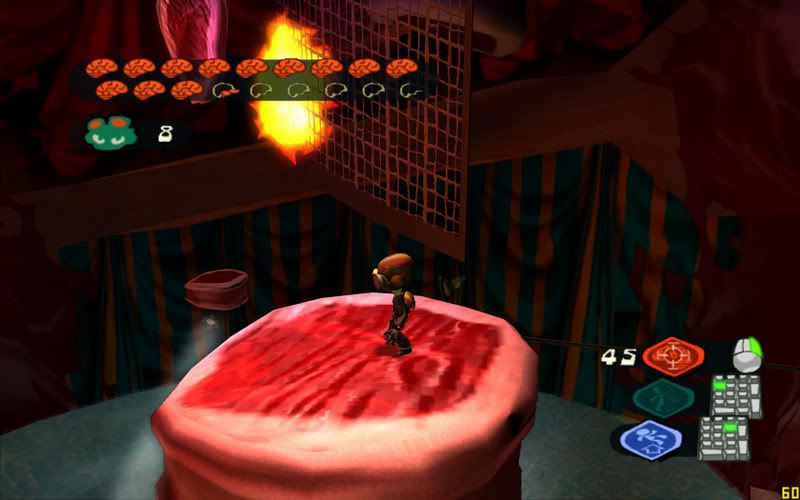
For instance, before I started writing this I was stuck here:


Yes, I'm standing on a steak and I have to jump to that netting over there that coincidentally is on fire. Below me the water is rising, so I have limited time to do everything.

According to the FAQ:
This is, perhaps, the most difficult section of the entire Meat Circus. To make things easier on yourself, once you are on the first fence, try to jump to the inside of the second fence and then stay on the inside of the fences. You'll need to use double-jumps and a bit of floating to get between each fence. Be sure to constantly rotate your camera to allow yourself the most direct view of each jump.
And the other FAQ:
Get as high as you can before you DOUBLE-JUMP and glide to the second screen, then shimmy left some more and do similar jump to reach the third screen [this is a hard jump].
Ya gotta love the stoic calm of the FAQ-writer.

Yikes! I spent all of Wednesday night trying these first two jumps. I couldn't do it. Yesterday afternoon, I nailed it. I got to the top of this series of impossible jumps. I screamed in triumph!! Then I looked for where to go next-- I jumped to a meat platform, and the waters rose and killed me in an instant.

So I did it again.

Tried to make it to a different meat platform. Died again. I've now done this most difficult part of the entire game over and over and I can't survive mostly because I have no idea where to go next!!

ARRRRRRGH.

I haven't even fired it up today.

This is why people don't buy games like Psychonauts. There is no recourse. I can't turn down the difficulty. I don't even think there are cheats. I just have to do it.

I'll do it. Eventually.

Tuesday, April 24, 2007

No one wants to hear about your D&D character


This weekend I finished Oblivion. Well, I didn't really finish it. I finished the main storyline.

And the Mages' Guild storyline.

And the Knights of the Nine storyline.

And I think that's enough.

I've finished many other stories while traveling through Cyrodiil. I've solved problems large and small. I've met vampires and kings, bandits and prostitutes, beggars and ghosts. There's a lot there. I could start a different character and play the game over, avoiding everything I've done, playing a different way, and still see all new content. With my current character could rise to the head of the fighter's guild (I'm already over halfway there), the King's Armorers are making me a set of kickass plate mail (and they don't do that for just anyone) that won't be ready for another two weeks of gametime. Hell, there's an expansion out.

I've been playing Oblivion as my "main game" since September. Sure, I've had forays into Defcon, A Force More Powerful, City of Heroes, Wii Sports, Marvel Ultimate Alliance, Rayman and the Raving Rabbids, and a whole raft of DS games, but they were either taking time away from Oblivion or played simply because I couldn't be at my home computer. That's eight months of serious gaming. Good times.


But for the last month or so it hasn't really been a challenge. My guy is too uber for any monster to pose a serious threat. I ran through the quests to see the stories, not really playing the game as I had been playing it. It was never a question of whether I could do the quest, it was only how long it would take. My character had outlevelled the world, and it was time to finish up and move on to something else.

So on Sunday morning I sat down to finish the main storyline and call it. I finished the quest, and the next thing I know the Chancellor is telling me my armor will be ready in two weeks. Okay, well, may as well wrap up the mages' guild storyline. So I did, but there was still a week and a half to go. Well, might as well go tell the other Knights of the Nine that I had all the holy relics and we can now go take on that Big Bad. So I did. Still a week before the armor's ready, and what if it's not as good as the armor I have? After all, the armor I'm wearing is a holy relic (and part of an add-on), so it should be better than mere royal armor. Should I go on and finish the fighters' guild storyline?

And then I noticed it was getting dark. Shit. Oblivion takes another day.

I went to the Arch-Mage's Sanctuary (now mine), took one last look around, and shut it down.

That's the weird thing about Oblivion. Normally in an RPG, when you finish the main quest, you get a cutscene, you've saved the world, and yay, your life here in this world is over, watch the credits, see who made the game, and see some bloopery stuff as a reward for sitting through the credits (Warcraft III is great for this). In Oblivion the world of Cyrodiil just keeps going. Sure you're now champion of the realm, but you can just add that to the list of your accomplishments and go see who else needs help.


You have to decide to leave. You have to decide everyday to do something else, because it's still there, you can go back. You can pick up where you left off. There are no guildmates to say, "Where have you been? Why did you leave?" They don't know you've been gone. Their world is in stasis.

Jesus, I'm way overthinking this.

Anyway, it's a little depressing to have to leave Oblivion instead of being given a pat on the back and kicked out. I'm used to getting kicked out of my gameworlds. That's why I avoided MMO's for so long-- I like games that end. I like to say, "I finished -----."

So did I finish Oblivion? People tell me that the assassins' guild storyline is the best part, and I didn't touch it. Other people tell me the same thing about the thieves' guild. I know I'm finished with Oblivion for the time being. I've got to work on the backlog.

But I'll probably be back. Shivering Isles, y'know.

Thursday, April 19, 2007

On Context


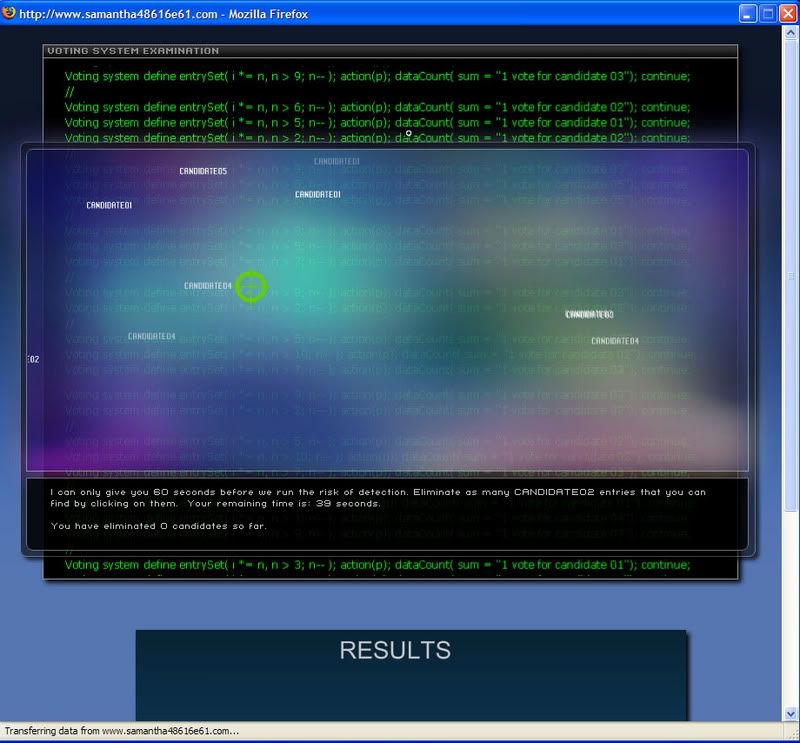
This is quite possibly the silliest game ever. It's a little flash game where the words "candidate01" through "candidate05" come floating out from the center. The player controls a crosshairs and must locate and click on as many candidate02's as he can in one minute. The best I've ever done is 24 zaps in the minute. One person online claims to have gotten over 100, but I think he's lying as I don't see how that's possible given the speed of the words and the number that pop out in a minute.

Reason dictates that I should play this for about five minutes and be done with it forever, yet I keep going back to it. Why? Because I want to prevent an election from being rigged.

You see, this little game is part of an alternate reality game surrounding the Heroes TV show. The show hasn't been on TV for over a month, but the internet has been alive with a conspiracy. One of the heroes is running for congress, and we've (that is, those of us dealing with the ARG) found out that the villain has rigged this election. Everytime we zap one of those candidate02's, we're getting rid of a fake vote. If everyone manages to zap enough (and we have no idea how many are enough) then we will change the outcome of the election.

So I click and click, and after every session, I enter my email so I'll get credit for the 20 or so votes that I've zapped. I want to change the world. I want to be a hero. In the larger context, zapping those votes means I can.

On the other hand, I worry. There's no proof that I'm actually getting rid of bad votes. I could be helping rig the election. I don't zap votes for "Petrelli," I zap "candidate02." Who is he? I don't know. So while I've been told that I'm fighting for the good guys, there are too many layers of abstraction for me to be sure.

This game is remarkably similar to one of the first videogames ever invented for the home TV. On Ralph Baer's brown box, you could set up a game where one player controlled a red box, and the other player controlled a white box. The white player chased the red player around (using early joysticks) and tried to catch him. The game was over when you got caught, then you would switch.

35 years later we're still playing the same game.

Tuesday, April 17, 2007

De Blob

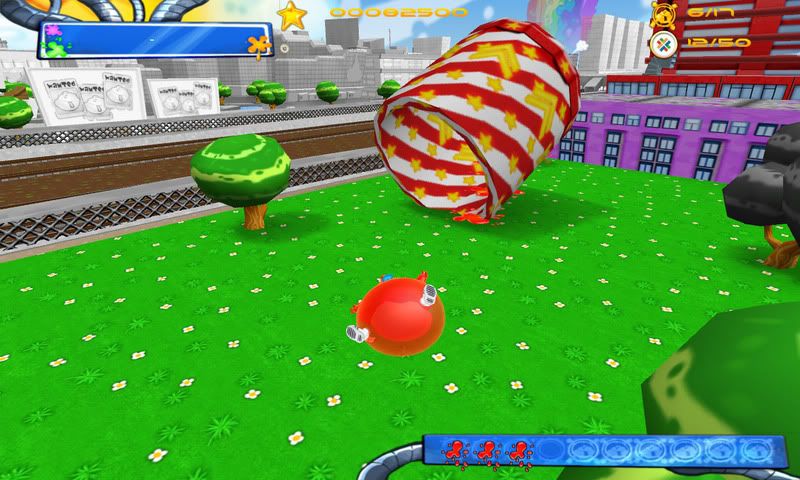
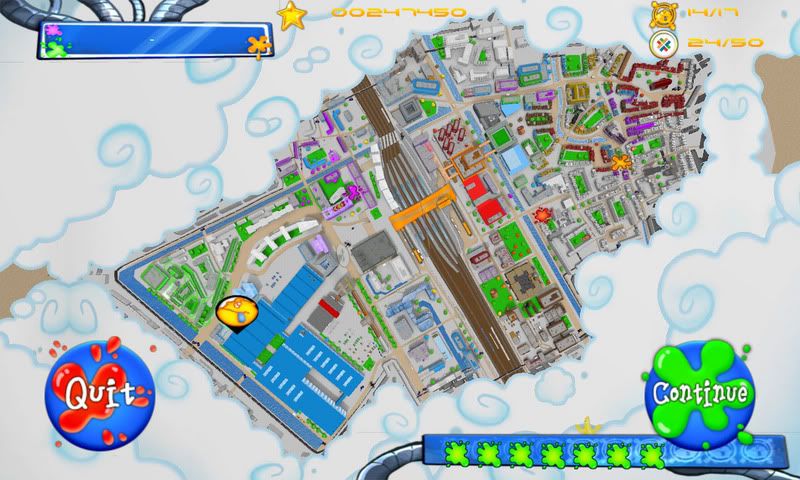
So over the weekend I finally played a little game from the Independent Games Festival called De Blob. This was the entry from the Hogeschool van de Kunsten in Utrecht, Netherlands in the student competition. It's a great little game where you play an alien blob that rolls around absorbing people of different colors, changing colors yourself, and painting buildings whatever color you happen to be at the moment. You start with an entirely gray city, and end in a riot of colors. There are specific targets to hit, and coins stashed in out of the way places that you can collect. It's half Katamari-Damacy and half Marble Madness.

It's gorgeous and addicting, yet unpolished. There is no readme.txt to explain the big picture. I wanted to finish the first city and continue to the next, but I had to go find the website again (I downloaded this a couple of weeks ago) to find out that there was only one level. There's a simple arcade scoring system that I don't care a fig about. I'm not going to do it for points, I want some "You've won!" reward. There's a rudimentary story of the Blob's spaceship crashing into the city and MIB's trying to track him down. Despite that, the game never ends. I confess I didn't collect all the coins, but I did paint the entire city, hitting all the target buildings, and there was no win condition.

The reward is just as important as the obstacle. Peggle knows this. When you finish a level there are fireworks, Ode to Joy plays, and you get a slow motion closeup of the last peg you hit. I giggle everytime I see it because it's so over the top.

I was playing De Blob on the laptop in the lobby of the show this weekend and attracted a gaggle of kids looking over my shoulder. They all wanted it. Good. It's a worthy game with a very simple mechanic. Hopefully someone will hire the team of students responsible for De Blob and expand it into a full game. Until then, I have one city to paint over and over again. Maybe I'll finally get all the coins.

Tuesday, April 10, 2007

And another one...

So here's Yet Another Blog. I'm starting this during my most busy time, figuring that if I can get a post a day out when I'm really busy, it'll be cake when I'm not. It could just be another blog with two posts and then nothing forevermore.

I will try.

The idea is that I feel in between academia and industry, in between drama and games, in between scholarship and creation. I am not a delicate flower, I'm just hoping to get some writing done, with maybe some links and pictures too.

So here we go...